YouTube Keyword Research
Keyword analysis with real data: YouTube search suggestions, 12-month interest chart, seasonality and competition. Completely free.
- Real YouTube search suggestions and long-tail keywords
- 12-month interest chart, seasonality and competition
- Completely free — with real data
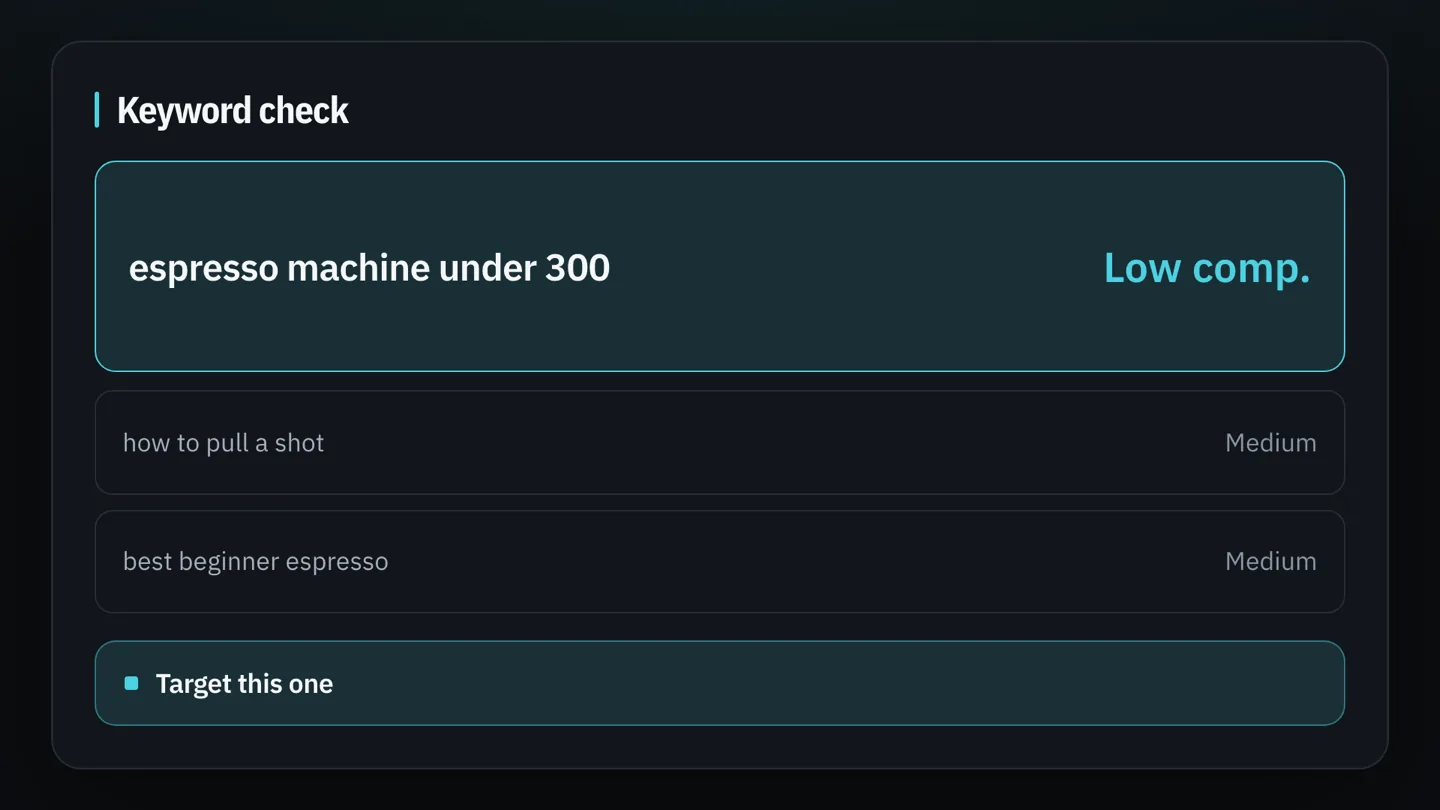
How it works
-
1
Type a phrase your audience searches
-
2
Compare interest, competition and related terms
-
3
Build a title around the low-competition term
YouTube keyword research is not Google keyword research. On Google, people describe a problem. On YouTube, they describe a video they want to watch — "how to", "tutorial", "vs", "in 10 minutes", "2026". Tools built for web SEO miss that difference, and it is the difference between a video that gets suggested and one that does not.
Where the numbers come from
The suggestions come from YouTube's own autocomplete — the same list a viewer sees while typing. That is not an estimate: it is what YouTube believes people search, ranked by how often they search it. The 12-month interest curve comes from public interest data, so you can see whether a topic is growing, flat, or seasonal before you spend a weekend filming it. One limit, stated plainly: that curve is built from Wikipedia pageviews, so it appears for topics that have an article — “video editing software” yes, “best mic for youtube” no. When it is missing the tool says so; suggestions and long-tail come from YouTube itself and are always there.
Reading competition honestly
A high-volume phrase is worthless to a small channel if every result is a 2M-subscriber channel. The competition reading tells you how contested a phrase already is, so you can trade volume for winnability. A phrase with a tenth of the searches and a tenth of the competition is usually the better video.
Seasonality is a calendar, not a warning
If a topic peaks every January, that is not a reason to avoid it — it is a reason to publish in December. The 12-month curve exists so you can plan backwards from the peak instead of arriving after it.
What to do with the result
Pick the lowest-competition phrase that still has real interest, then build the title around it in the viewer's words, not yours. Put the phrase early in the title, use it once in the first line of the description, and let the rest read like a human wrote it. Keyword stuffing has not worked on YouTube for years.
Other tools
Ready to Grow Your Channel?
Turn your channel signals into a clear next move — start with free credits.
Start Free Now